Custom Packaging for Small Business: The Complete 2026 Guide
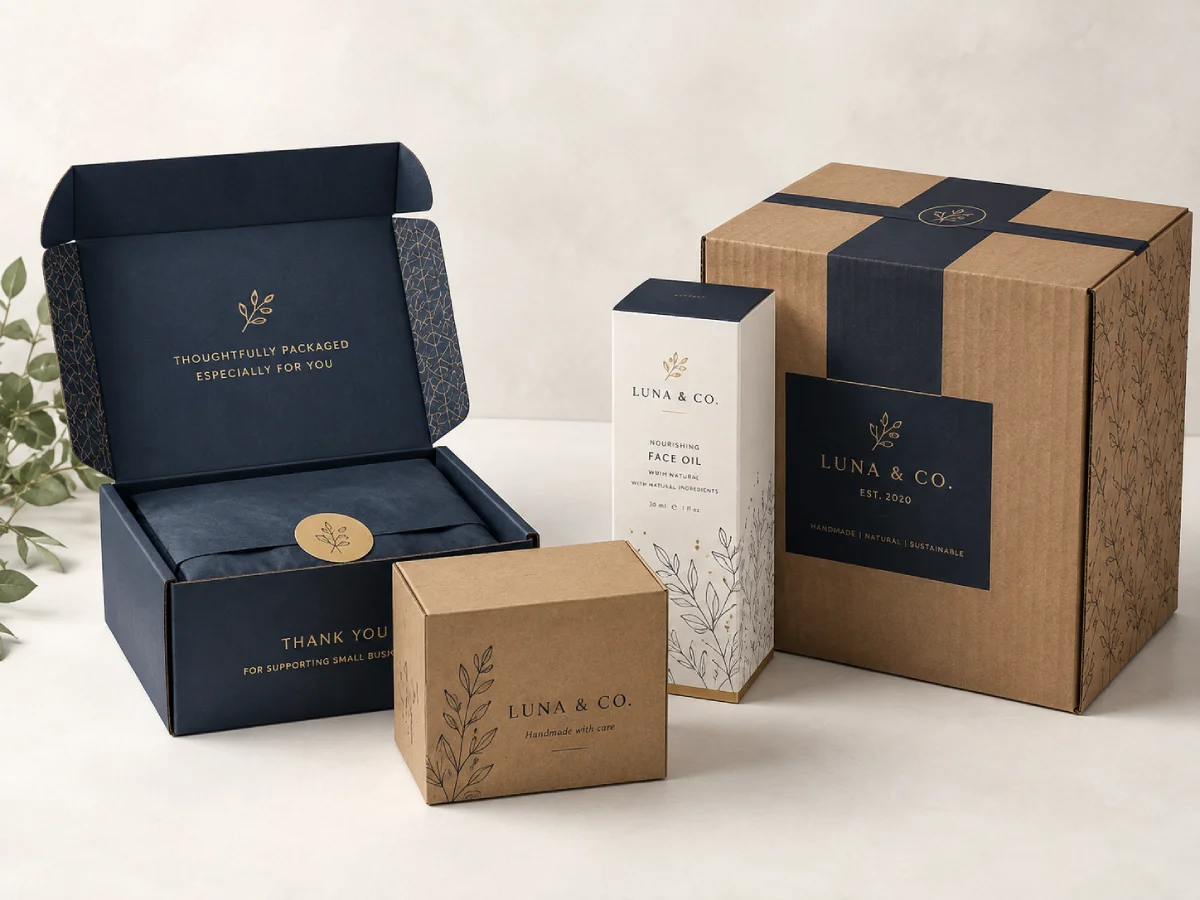
Custom Packaging for Small Business: The Complete 2026 Guide
Custom packaging for a small business means creating boxes or other packaging around your product, brand, shipping needs, and budget instead of using only standard stock packaging.
You do not need the most expensive box to make your packaging better. You need the right size, enough protection, clear branding, and an order quantity your business can actually use.
This guide explains how to choose packaging, what materials and box styles make sense, what affects the price, how to prepare your design, and how to order without making costly mistakes.
What is custom packaging for a small business?
Custom packaging is packaging made or printed for a specific product or brand. You may customize the size, shape, material, color, printing, logo, inserts, finish, or opening style.
Customization can be simple. A small brand might start with a kraft mailer printed with one logo. Another business may need a fully printed folding carton with an insert that holds its product in place.
The goal is not to add as many features as possible. The goal is to create packaging that does its job well.
Good packaging should usually do four things:
- Fit the product properly
- Protect it during storage or delivery
- Make the brand easy to recognize
- Stay within a sensible cost per order
Apple Custom Boxes creates custom packaging boxes in different sizes, materials, structures, printing styles, and finishes for businesses across the USA.
Why should a small business consider custom packaging?
Generic packaging can be enough when you are testing a new product. But as orders grow, standard boxes can create problems.
A box may be too large. You may need too much filler. Fragile products may move during shipping. Your packaging may also look completely different from the brand customers saw on your website.
Custom packaging gives you more control over those issues.
1. Better product fit
A box designed around the size of the product can reduce empty space and unnecessary packing material. It can also make the product look more organized when the customer opens it.
2. Better protection
The right structure matters even more than appearance.
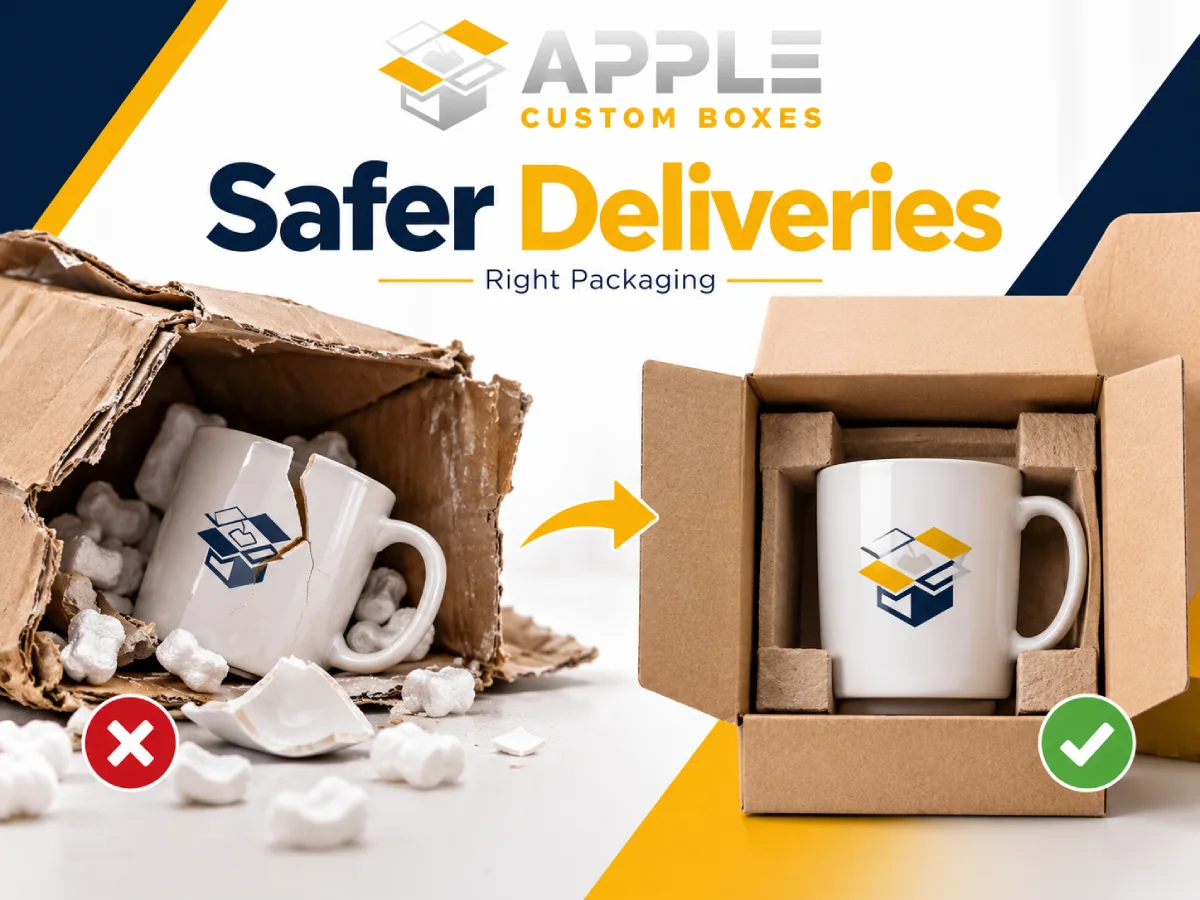
A light T-shirt does not need the same packaging as a glass candle, electronic device, or set of cosmetic bottles. Fragile or heavy products may need stronger board, an insert, dividers, or extra cushioning.
3. More consistent branding
Your package is one of the few parts of an online sale that customers can physically touch.
You can use your logo, colors, typography, instructions, QR code, product information, or short brand message to make the package feel connected to the rest of your business.
4. A cleaner customer experience
Correctly sized packaging is easier to open, handle, store, and present. Small details such as tear strips, inserts, clear instructions, and organized product placement can make an order feel more considered.
What packaging is best for a small business?
There is no single best packaging type for every small business. Start with the product and how it reaches the customer.
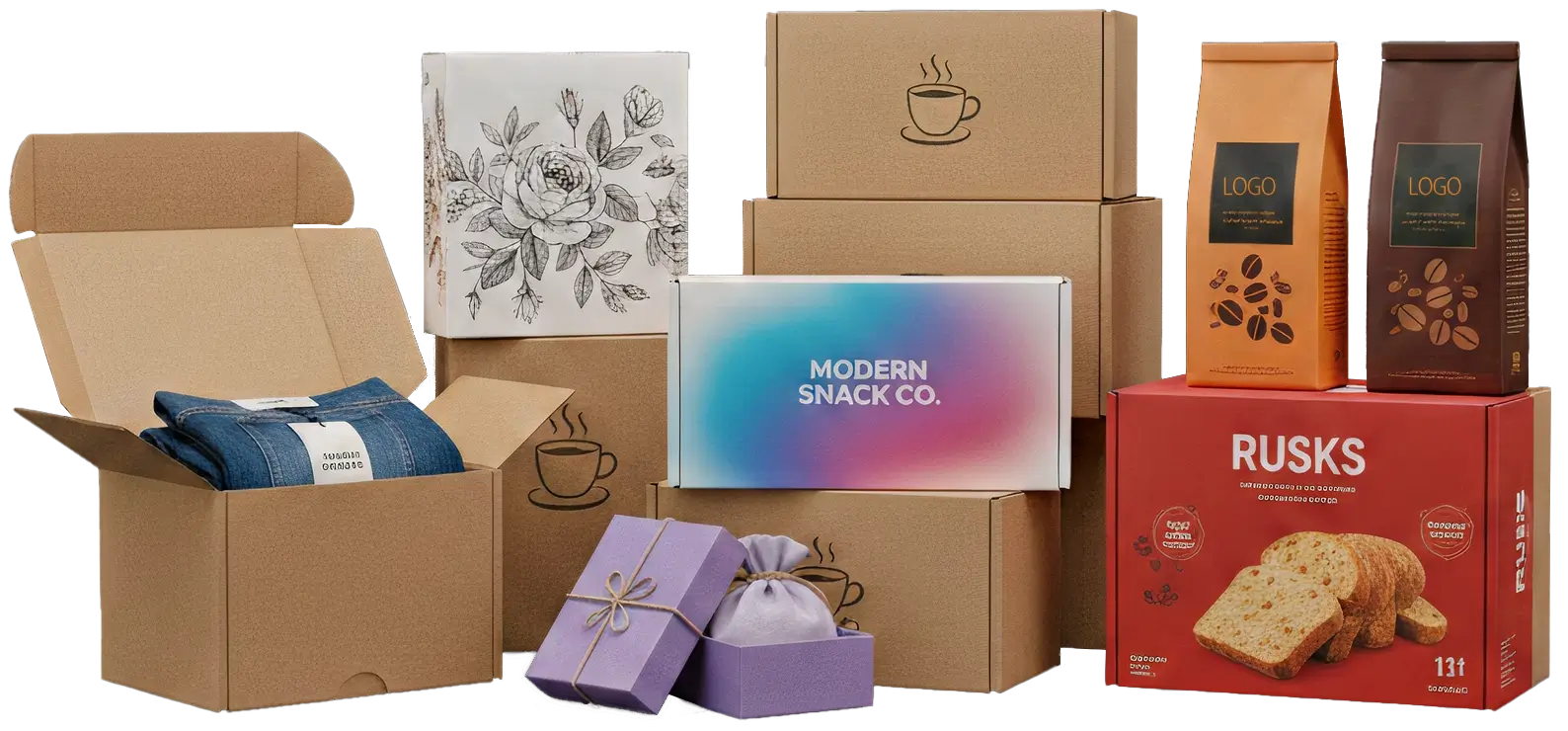
| Packaging typeGood forMain benefit | ||
| Folding carton / cardboard box | Cosmetics, food, supplements, small retail products | Lightweight and highly printable |
| Kraft box | Handmade goods, soap, candles, natural-looking brands | Simple appearance and useful branding surface |
| Corrugated box | Shipping, e-commerce, heavier or fragile products | Greater structural protection |
| Mailer box | Clothing, subscriptions, gifts, e-commerce orders | Combines presentation and shipping function |
| Rigid box | Premium gifts, jewelry, electronics, luxury products | Stronger premium presentation |
| Display box | Retail counters and shelf products | Keeps several products visible and organized |
Mailer boxes for e-commerce businesses
Mailer boxes are a useful starting point for many online stores because the same box can protect the product and carry your branding.
They work well for apparel, subscription products, gifts, accessories, beauty items, and other products that do not need a large shipping carton.
See Apple Custom Boxes' custom mailer boxes if your products are mainly shipped directly to customers.
Corrugated boxes for shipping
Corrugated board is often a better choice when strength matters more than a very smooth retail finish.
It can be used for shipping products, larger e-commerce orders, storage, electronics, and items that need more protection.
Folding cartons for retail products
Folding cartons are common for smaller products that need a printed retail box.
They provide space for your logo, product name, instructions, ingredients, warnings, barcodes, and other required information.
Display boxes for stores
If customers buy your products from a physical store, the outer shipping box may be less important than how the product appears on the shelf or counter.
Custom display boxes can organize several products while keeping the front of the package visible.
Rigid boxes for premium products
Rigid boxes have a thicker structure and are normally used when presentation is a major part of the sale.
They can make sense for premium gifts, high-end cosmetics, jewelry, electronics, and limited product launches. They can also cost more to produce and ship, so they are not necessary for every business.
How to get custom packaging for a small business
The safest way to order custom packaging is to make decisions in the right order. Do not start with foil, colors, or fancy finishes. Start with the product.
Step 1: Measure the product
Measure the length, width, and height of the product that will go inside the box.
Also think about:
- Product weight
- Fragility
- Number of products per box
- Whether you need an insert
- Whether the product already has primary packaging
- How the package will be shipped or displayed
Do not make a box much larger just because you are unsure of the dimensions. Extra space may require extra filler and can allow the product to move.
Step 2: Decide where the package will be used
Ask one simple question: What happens to this package after I pack the product?
A retail carton goes to a shelf. An e-commerce mailer travels through a delivery network. A gift box may go inside another shipping box.
Your sales channel helps determine how much strength and presentation you need.
Businesses selling mainly online can also review e-commerce packaging options before choosing a structure.
Step 3: Choose the material
Choose the material based on product weight, protection, appearance, print needs, and budget.
Common choices include cardboard or paperboard, kraft board, corrugated board, and rigid board.
Do not choose a material just because it looks premium in a photo. A simple material with the right structure can perform better than an expensive material that does not suit the product.
Step 4: Choose your printing
Most small businesses will hear terms such as digital printing, offset printing, CMYK, and Pantone or PMS.
Digital printing prints artwork directly and can be useful for shorter runs or designs that change often.
Offset printing is commonly used for larger production runs and projects where consistent print quality is important.
CMYK uses cyan, magenta, yellow, and black to build printed colors.
Pantone or PMS is a color matching system that can be useful when a brand needs a specific color reproduced more consistently.
You do not need to choose a printing method alone. Give the packaging supplier your artwork, quantity, material, and color needs so they can recommend an appropriate process.
Step 5: Prepare the dieline and artwork
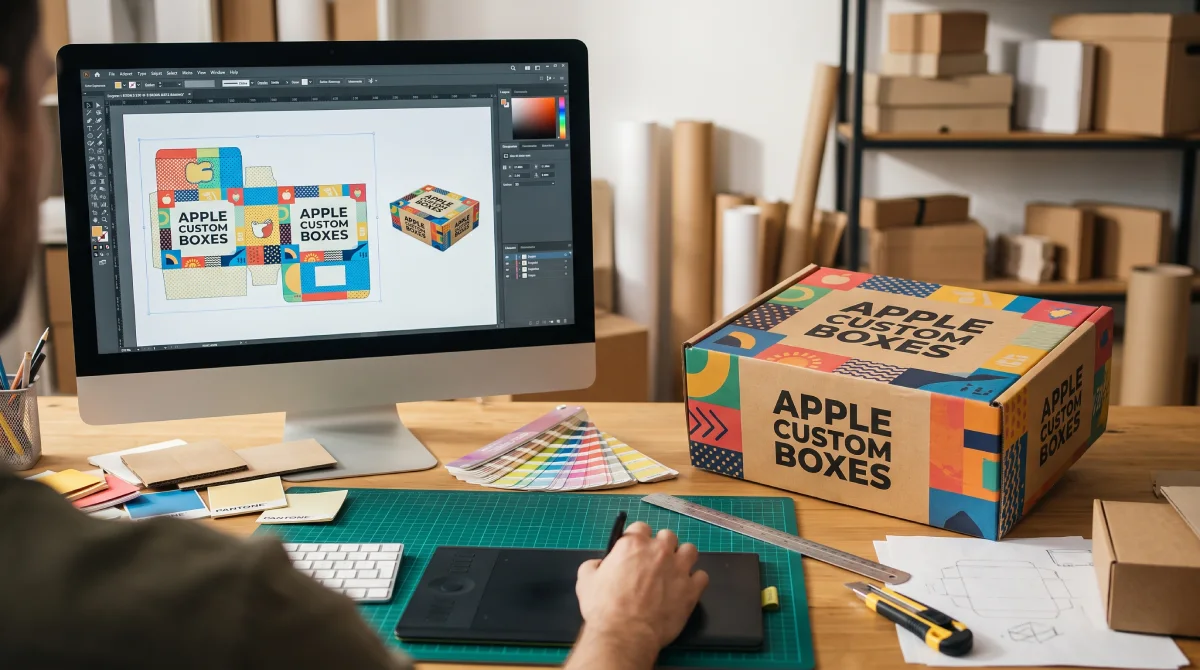
A dieline is a flat template showing where the box will be cut, folded, and glued. Your artwork is placed on this template before printing.
Check the final proof carefully.
Look at:
- Logo position
- Spelling
- Product information
- Barcode or QR code
- Colors
- Fold lines
- Cut lines
- Required warnings or legal text
A small mistake on one proof can become the same mistake on every box in the production run.
Step 6: Review a sample or proof
A digital proof can help you check layout and placement. A physical sample can help you check size, material, construction, and how the product fits.
A sample becomes more important when the box has a new structure, expensive finish, insert, unusual product shape, or large production quantity.
Step 7: Approve production
Do not approve the job until the dimensions, material, quantity, print, finish, artwork, and delivery details are clear.
Keep the approved artwork and specifications. They make reordering easier later.
How much does custom packaging for a small business cost?
There is no useful single price for custom packaging because two boxes that look similar can have very different specifications.
The main cost factors are:
| FactorHow it can affect cost | |
| Box size | Larger packages normally use more material |
| Material | Paperboard, corrugated and rigid structures have different production needs |
| Quantity | Production setup is spread across the number of units ordered |
| Printing | Print method, coverage and color requirements matter |
| Finishing | Foil, embossing, Spot UV and specialty laminations add production steps |
| Inserts | Custom trays or dividers add material and manufacturing work |
| Structure | A simple folding carton differs from a complex rigid or custom-shaped box |
| Shipping | Package size, weight, order volume and destination can affect freight |
The better question is not, “What is the cheapest box?”
Ask: What is the simplest box that protects my product and still gives customers the experience my brand needs?
How can a small business keep packaging costs under control?
Start simple
You do not need foil, embossing, a custom insert, inside printing, soft-touch lamination, and several colors on your first order.
A correctly sized box with strong artwork can be enough.
Use one package for several products when possible
If you sell several items with similar sizes, one box structure may work for more than one SKU.
Do this only when the fit is still good. Saving money on boxes does not help if you spend the difference on filler or damaged products.
Ask how quantity changes the quote
Instead of asking for only one quantity, ask for pricing at a few realistic order levels.
For example, compare the amount you expect to use soon with the amount you may need after growth.
Do not buy a huge quantity just to reduce the unit price. Old packaging becomes wasted inventory when you change a logo, product size, ingredients, instructions, or required label information.
Spend money where customers notice it
If your box already protects the product, put the next part of your budget where it has the most value.
That could mean cleaner artwork rather than another finish. For a fragile product, the better investment may be an insert rather than foil stamping.
Compare total packaging cost
A cheap outer box can become expensive if it also needs a lot of tape, filler, labels, or an extra shipping carton.
Look at the whole packaging system rather than the price of one piece.
Small business packaging design: what should go on the box?
Your packaging should make important information easy to find.
Depending on the product, this may include:
- Brand name and logo
- Product name
- Short product description
- Instructions
- Ingredients
- Net quantity
- Safety information
- Barcode
- QR code
- Website or social handle
- Recycling or disposal instructions when properly supported
Do not fill every open space.
Customers should be able to see what the product is and who made it without searching through a wall of text.
Packaging rules small businesses should not overlook
A packaging printer can help produce your box, but the business selling the product is still responsible for checking the rules that apply to its product.
Food packaging
Most prepared foods sold in the United States have labeling requirements, including rules related to food labeling, nutrition information, and major allergens. Some small businesses may qualify for specific exemptions, but an exemption should never be assumed.
Review the FDA guidance for starting a food business when your product is food or a dietary supplement.
The FDA states that proper labeling, including nutrition and major-allergen labeling, is required for most prepared foods.
Cosmetic packaging
Cosmetics sold in the United States are subject to federal labeling requirements. Required information can include product identity, net quantity, business information, ingredients, and warnings when applicable.
Use the FDA cosmetic labeling requirements as a starting point before approving printed packaging.
Children's and other regulated products
Some consumer products have additional labeling rules based on the product, its parts, or the age of the intended user. The U.S. Consumer Product Safety Commission labeling overview explains several requirements that can apply to consumer products.
If your product is regulated, settle the required label content before printing a large packaging order.
What about eco-friendly packaging?
Small businesses often want packaging that uses less material or is easier to recycle. That can be a useful goal, but environmental claims need to be specific.
The U.S. Environmental Protection Agency notes that using lighter or more efficient packaging can reduce material use and waste.
Start by asking practical questions:
- Can the package use less material?
- Can the box be made smaller without hurting the product?
- Does it need a plastic window?
- Can you reduce unnecessary inserts?
- What material is the box actually made from?
- How should a customer dispose of it?
Be careful with broad words such as “green” or “eco-friendly.” The FTC's Green Guides say environmental marketing claims should be truthful, supported, and properly qualified. The FTC also gives specific guidance for claims such as recyclable, recycled content, compostable, and degradable.
Specific language is usually more useful to customers than a vague green label.
7 common custom packaging mistakes small businesses make
1. Designing before measuring
A great-looking box is useless if the product does not fit.
2. Choosing looks over protection
Start with structure. Add decoration after the package can perform its main job.
3. Ordering too much too early
Your product, branding, legal copy, or dimensions may change. Avoid tying up cash in packaging you may not use.
4. Approving artwork without checking it
Review every word, color, barcode, position, and required statement before production.
5. Making the box larger than necessary
Large packaging may use more material and require more filler. Size the package around the real product.
6. Adding every premium finish
More finishes do not automatically create better packaging. Use them when they support the brand or product.
7. Ignoring how customers receive the package
A retail box and a shipping box solve different problems. Design around the actual sales channel.
Packaging examples for different small businesses
Small clothing brand
A clothing seller may use a printed mailer for direct-to-consumer orders or a folding box for premium garments.
Explore custom apparel packaging for structures designed around clothing and accessories.
Candle business
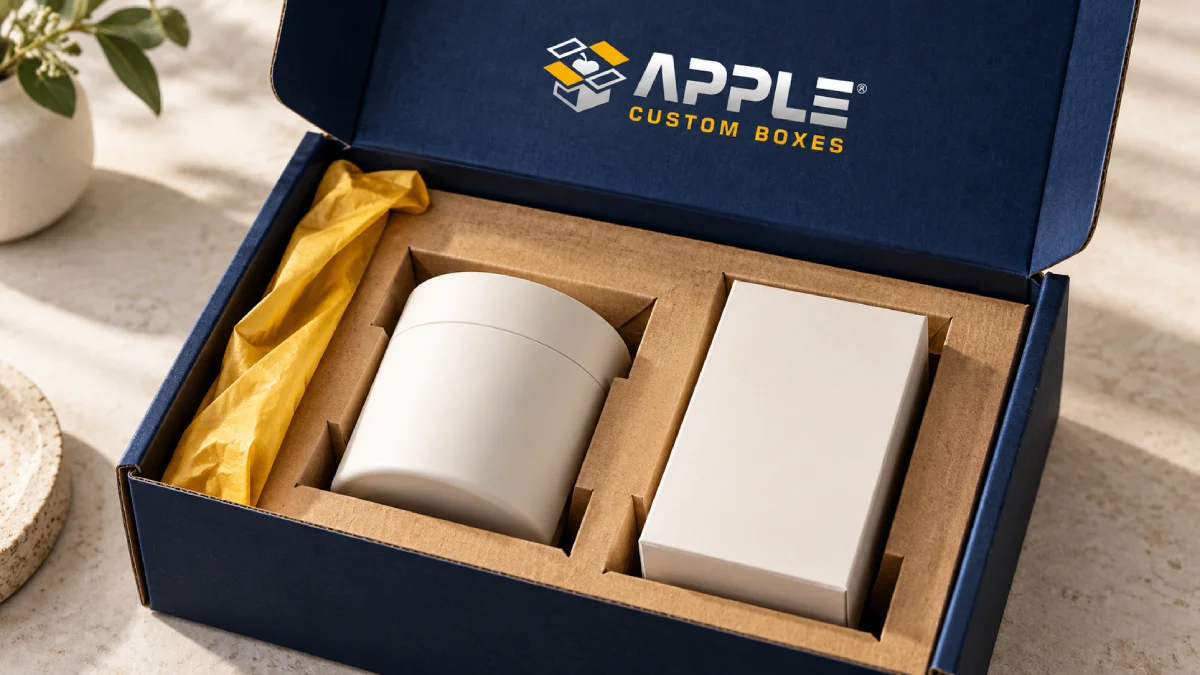
A candle normally needs more protection than clothing. The box should fit the container closely, and an insert may help keep glass containers from moving.
Cosmetics startup
A cosmetics business may need individual folding cartons for retail presentation and a separate corrugated or mailer box for shipping orders.
Leave enough usable panel space for any information required by applicable labeling rules.
Electronics seller
Electronics often need packaging designed around both movement and impact. Inserts, dividers, or a stronger box structure may be more valuable than decorative features.
Apple Custom Boxes also offers custom electronic packaging for electronics and accessories.
Etsy or handmade business
A small handmade seller does not always need a fully printed luxury box.
A simple kraft or mailer box with a clear logo and neat product presentation can be a sensible first step. The packaging can become more detailed as order volume and margins grow.
When should a small business switch to custom packaging?
You do not need custom packaging just because your business exists.
It starts making more sense when:
- Your current packaging does not fit well
- You regularly ship the same products
- You are using too much filler
- Products need better protection
- You want consistent packaging across repeat orders
- Your retail package needs proper branding or information
- Your current package does not match the position of your product
- You are preparing for retail, wholesale, or a larger product launch
If you are still testing demand, start carefully. You may be better off validating the product before buying a large amount of packaging.
What should you send a packaging supplier for a quote?
A clear request gets you a more useful quote.
Prepare:
- Product type
- Product dimensions
- Product weight
- Desired box dimensions if known
- Quantity
- Preferred material if known
- Box style
- Printing requirements
- Artwork or logo files
- Finishing requirements
- Insert requirements
- Delivery destination
- Target date
If you do not know the material or box style, that is fine. Send the product information first and ask what structure makes sense.
Get custom packaging for your small business
Good custom packaging for a small business does not have to be complicated. Start with product fit, protection, order volume, and budget. Then add the branding and finishes that actually help.
Apple Custom Boxes offers custom sizes, box structures, digital and offset printing, inserts, finishes, design support, samples and packaging options for businesses across the USA. Flexible ordering is available, including no minimums on selected packaging projects.
If you already know your product size and quantity, the next step is simple: request a custom packaging quote.
Frequently asked questions about custom packaging for small businesses
How do I get custom packaging for my small business?
Start by measuring your product and deciding whether the package is for shipping, retail, gifting, or another use. Choose a suitable box style and material, send your quantity and artwork to a packaging supplier, review the quote and proof, check a sample when needed, and approve production only after confirming the specifications.
What is the best packaging for a small business?
The best packaging depends on the product. Mailer boxes work well for many e-commerce products. Corrugated boxes suit shipping and heavier goods. Folding cartons work well for many retail items, while rigid boxes can suit premium products. Protection and product fit should come before appearance.
Is custom packaging expensive for a small business?
It can be inexpensive or costly depending on the specifications. Size, material, quantity, printing, inserts, finishing, structure, and delivery all affect the price. A simple printed box normally requires fewer production steps than a complex box with specialty finishes and custom inserts.
Can a small business order custom boxes in small quantities?
Yes, depending on the packaging type and supplier. Apple Custom Boxes states that it offers flexible ordering, including no minimums on selected packaging projects. Ask for the minimum or available quantity for the exact box you need before planning your order.
What information do I need before ordering custom boxes?
You should know your product dimensions, weight, approximate quantity, sales channel, protection needs, and delivery destination. Artwork, preferred materials, box styles, and finishes are helpful but can be decided after the basic product requirements are clear.
Should I use digital or offset printing for my packaging?
Digital printing can be useful for shorter runs and projects that change often. Offset printing is commonly used for larger runs and projects with more demanding print requirements. The best method depends on your quantity, material, artwork, color needs, and budget.
Should I order a packaging sample first?
A sample is useful when fit, structure, material, inserts, or special finishes matter. It becomes especially valuable before a large order or when you are using a new packaging design for the first time.
What makes small business packaging look professional?
Correct sizing, clear branding, readable information, consistent colors, clean printing, and neat product placement matter more than adding many decorative effects. Professional packaging should first look intentional and work properly.
Can I use recyclable or sustainable packaging claims on my box?
Only use environmental claims that you can support. The FTC advises businesses to avoid broad, unqualified environmental claims and provides specific guidance for terms such as recyclable and recycled content. Check the material and the claim before printing it on your packaging.
About Apple Custom Boxes
Apple Custom Boxes is a premier USA custom packaging manufacturer delivering high-quality custom printed boxes, mailers, product packaging, and wholesale boxes with free design support and fast turnaround.